

What starts as a simple build can quickly turn into a logistical headache: multiple vendors, inconsistent timelines, communication gaps, and unexpected costs. When we source electronic assemblies (such as cable assemblies, wire harnesses assemblies, PCB assemblies, and box builds) separately, inefficiencies can compound fast.
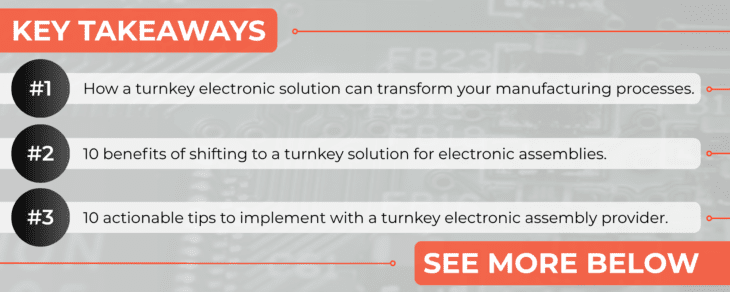
A turnkey approach eliminates that complexity by bringing everything under one roof. Here’s 10 ways in which that shift can transform your manufacturing process.
- Vendor Consolidation & Simplified Supply Chain
A turnkey approach replaces multiple suppliers with a single, reliable partner. Instead of coordinating separate vendors for components, subassemblies, and final integration, everything is managed through one source. This reduces administrative overhead, shortens decision cycles, and minimizes the risk of delays caused by misaligned suppliers. The result is a more predictable, efficient supply chain that’s easier to manage and scale.
Tip: check out our checklist, 8 Steps to Consolidate Vendors in Electronic Assembly, for a detailed guide of how to consolidate vendors effectively.
- Streamlined Communication & Single Point of Accountability
Managing multiple vendors often leads to fragmented communication and unclear ownership. With a turnkey provider, you have one dedicated point of contact responsible for the entire project. This ensures faster responses and clearer updates throughout each step of the assembly process. If an issue arises, there’s no confusion about responsibility, because your single partner owns the solution from start to finish.
Tip: when choosing a turnkey provider, assess their communication skills up front. Strong communication is an essential skill for turnkey electronic assembly partners.
- Guaranteed Component Compatibility & Reduced Errors
When multiple assemblies for one project are handled by different vendors, compatibility issues can arise. This can place extra responsibility on engineers to ensure each component will work together properly in the greater enclosure. When you work with one partner for all your assemblies, they can help ensure compatibility among components and assemblies in the design for manufacturability portion of the project. This reduces integration challenges, minimizes reworks, and significantly lowers the likelihood of costly errors during production or final assembly.
Tip: check that your assembly partner offers design for manufacturability purposes in order to ensure compatibility.
- Consistent, High-Quality Output
Quality can vary when multiple vendors are involved, each with different standards, processes, and certifications. A turnkey partner enforces consistent quality control across every stage, from incoming materials to final box build. Standardized processes, inspections, and testing protocols ensure that every cable assembly, wire harness, and PCBA meets industry and customer standards, resulting in reliable, repeatable performance.
Finding a partner that holds all the necessary certifications you need can also be a challenge. Working with a turnkey partner that holds necessary certifications, such as ISO 9001 and industry-specific ones, can help alleviate the pressure on your team to ensure each individual partner is assembling your electronics to your specs.
Tip: gather a list of all the certifications you require from an electronic assembly partner and assess your current partners’ service offerings. You may be using an electronic assembly provider that can offer a turnkey solution for you as opposed to just one type of asembly.
- Reduced Engineering & Purchasing Workload
Turnkey providers take on much of the administrative burden traditionally placed on internal teams. They often provide design for manufacturability (DFM) feedback to optimize designs before production begins, reducing the need for revisions during the assembly process. At the same time, procurement teams are freed from sourcing individual components and managing supplier relationships. This allows your internal resources to focus on innovation, product development, and strategic initiatives rather than on the administrative work behind each assembly.
Tip: involve your electronic assembly partner early in the project’s timeline in order to take full advantage of sourcing and design for manufacturability services.

- Faster Time to Market
Manufacturing teams are constantly working to shorten lead times. Often, a turnkey approach to electronic assemblies can help achieve this goal. A turnkey approach aligns sourcing, assembly, and testing into a single, coordinated process. By eliminating delays between vendors and reducing back-and-forth communication, production moves more efficiently from concept to completion. This enables faster product launches and helps you respond more quickly to market demands.
Tip: ask how your turnkey electronic assembly partner assesses its vendors and ensures on-time delivery.
- Lower Total Cost of Ownership
The true cost of manufacturing includes much more than the cost of the assembly itself. Shipping, administrative time, delays, rework, and quality issues all add into your final cost. A turnkey approach reduces these hidden costs by streamlining operations and improving efficiency. Additionally, turnkey providers often have established supplier networks and purchasing power, allowing them to secure better pricing on components and materials.
Tip: ask what your provider does to maintain relationships with its suppliers.
- Scalability to Match Demand
As your production needs change, managing multiple vendors can slow your ability to scale. A turnkey partner provides the flexibility to ramp production up or down without the need to onboard new suppliers or renegotiate contracts. This eliminates the administrative burden on engineering and purchasing teams when production must increase. Whether you’re moving from prototype to full production or adjusting volumes based on demand, a turnkey approach supports seamless scalability.
Tip: ask your partner about a plan for scalability in the prototype phase to ensure a smooth transition when production increases.
- Integrated Testing & Validation
Testing is most effective when it’s built into every stage of the manufacturing process. Turnkey providers integrate testing and validation throughout production instead of only after a project is completed. This ensures that individual components, subassemblies, and final builds all meet customer and industry quality specifications. This proactive approach reduces the risk of field failures, improves product reliability, and ensures compliance with industry and customer quality specifications.
Tip: ask your provider what its process is for testing and documenting quality throughout each assembly.
- Improved Inventory Management
Managing inventory across multiple vendors can lead to shortages, excess stock, and increased carrying costs. A turnkey provider centralizes inventory management, ensuring components are available when needed while minimizing overstock. This improves forecasting accuracy, reduces waste, and creates a more efficient and cost-effective supply chain.
Tip: make sure your purchasing team is aligned with the inventory management solutions your turnkey provider suggests.
Managing multiple suppliers for cable assemblies, wire harnesses, PCB assembly, and box builds doesn’t have to be complicated. A turnkey approach streamlines operations, reduces costs, and improves overall product quality, allowing your team to innovate without limitations.
If you’re looking to simplify your supply chain and improve efficiency and reliability, a turnkey manufacturing partner can make all the difference. Contact us at PGF Tech to learn about how this approach could work for your team: https://www.pgftech.com/contact-us/