


The best cable and wire harness assembly companies are able to produce high quality electronics from the prototype phase to full production. An important part of choosing a partner that can repeatedly produce high quality electronics is understanding how they use automation equipment and machinery. A partner that uses best-in-class machinery to produce cable & wire harness assemblies will:
- Prioritize uniformity and quality at each step of the assembly process
- Check for quality throughout the assembly process
- Scale production alongside your team while maintaining lead times
Below is a guide of the different parts of the cable & wire harness assembly process that can be automated to ensure manufacturability at scale.
Crimping
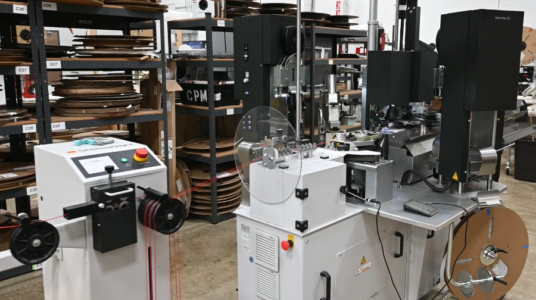
Wire crimping can be a tedious process when done by hand. If crimping is completed by hand, it is often difficult to crimp in the same manner for each individual wire that goes into the cable or wire harness assembly.
In order to guarantee each wire is crimped as similarly as possible, cable & wire harness assembly companies can use machines like the Schleuniger CrimpCenter 36 S. This machine automatically crimps and processes wires, allowing for consistency and speed.
Ensuring your cable & wire harness assembly partner has this machinery and all necessary team members are trained on how to use it is imperative to manufacturing quality and repeatability. Ask your partner about their machinery and training methods to understand how they can produce quality assemblies and scale with you.
Pull Testing
Automation equipment works wonders to cut lead times, promote uniformity, and ensure repeatability during the actual assembly of cables and wire harnesses. This machinery also comes in handy to test quality throughout the cable and wire harness assembly process.
Pull testing is a means to confirm the mechanical strength of a crimped, soldered, or terminated wire connection. Pull testing machines allow cable & wire harness assembly teams to test how strong the wire connection is to the exact specs needed for the larger cable or wire harness assembly’s specific application. Different wire classes require unique wire strengths, so working with a partner that uses a pull testing machine ensures you are getting the strength needed in highly sensitive environments, such as aerospace, defense, or medical devices.
Using a pull testing machine in the middle of the cable assembly or wire harness assembly process allows teams to validate that the project is being assembled correctly. This makes final testing much more of a validation than a first test.
Testing for Connectivity
Testing for connectivity is the last step in the wire harness and cable assembly process. As mentioned previously, testing for connectivity should act as a final validation that a cable or wire harness assembly has been built correctly. Using equipment like the Cirris machine, assembly teams can verify that all connections in a cable assembly/wire harness assembly have been built to properly carry an electric current.
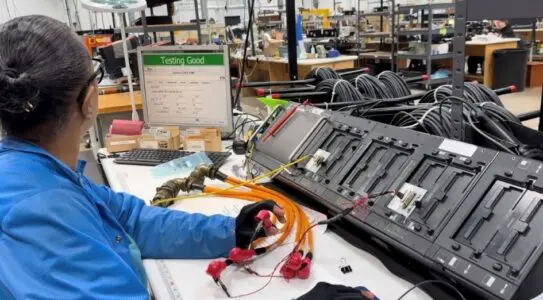
The Cirris machine checks for:
- Opens
- Shorts
- Miswires
- Incorrect pin assignments
All of the above can cause a cable or wire harness assembly to malfunction when in-use. This final step confirms that the assembly is built to last and avoids premature failure.
Automation is important aspect of cable and wire harness assembly because it allows your projects to be repeatedly manufactured at the highest quality each time. A cable & wire harness assembly company’s ability to use automation equipment and machinery confirms that they have the ability to create your assemblies to the proper specifications and scale production as needed.
If you’re looking for a cable & wire harness assembly partner with automation capabilities, look no further than to PGF Tech. Contact us today to ask about our automation equipment and training practices for cable, wire harness, and PCB assembly: https://www.pgftech.com/contact-us/