
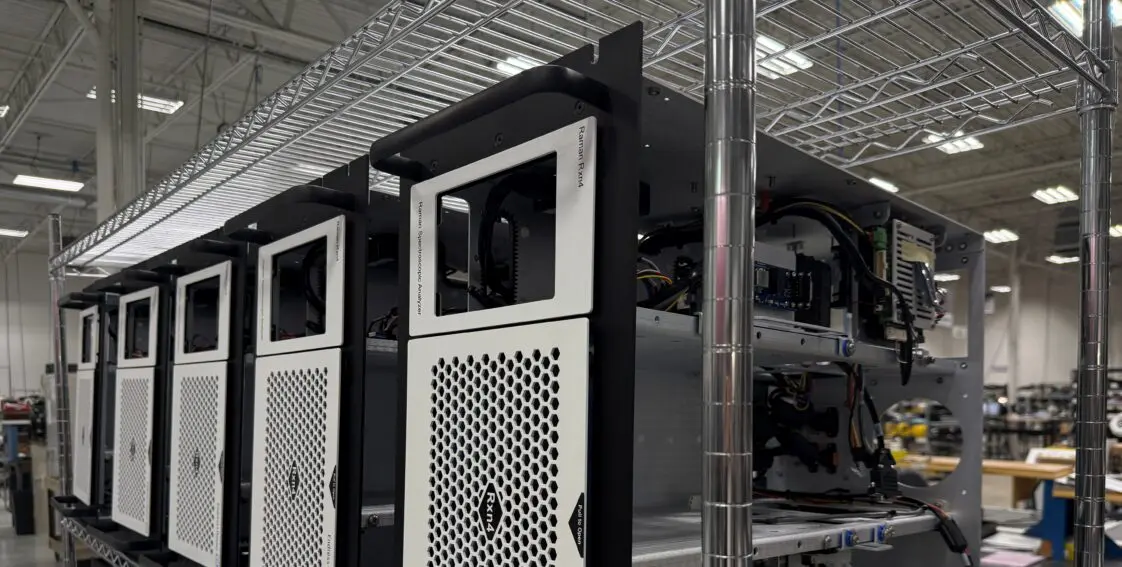
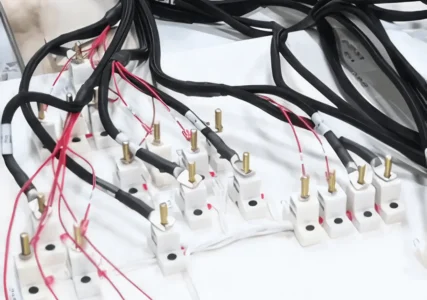
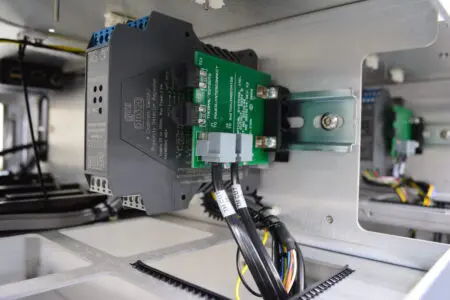
Cable assemblies, wire harness assemblies, PCB assemblies, and box builds are the backbone of industrial automation manufacturing. Each works to power the robotics, PLCs, and inspection systems needed for manufacturing across the globe.
Right now, each of the assemblies mentioned above are being completed by a different vendor. This often causes your engineering and purchasing teams to have:
- Fragmented communication among vendors
- Inconsistent quality among electronic assemblies
- Supply chain risks with some electronic assemblies
Instead, what if your electronic assemblies could all be built by the same partner? Select electronic manufacturing solutions providers can offer this ability, and here are 7 ways that you can decipher if it is time to move to a turnkey approach.
1- Managing Multiple Suppliers for One System
Starting with one of our most important reasons to move to a turnkey approach: communication. Often, trying to balance conversations between a different vendor for cable & wire harness assemblies, PCB assemblies, and box builds all for the same end-product can weigh down engineering and purchasing teams.
Moving to a single turnkey vendor brings procurement, manufacturing, testing, and delivery under one roof. This can streamline communication, simplify scheduling and increase quality among all electronic assemblies.
Tip: make sure to find one vendor that specializes in cable assembly, wire harness assembly, PCBA, and box builds instead of outsourcing some areas to another partner to maximize turnkey benefits.
2- Time-to-Market Is Critical
When time-to-market is of the utmost importance, using a turnkey electronic assembly partner can help speed up your manufacturing timeline. Because a turnkey partner provides cable/wire harness, PCB, and box build assembly services all under one roof, they know your project inside and out. This allows their team to:
- Coordinate component sourcing
- Manage production schedules
- Streamline communication between engineering and manufacturing
- Reduce delays caused by supplier handoffs
Tip: the sooner you involve a turnkey electronic assembly partner in your project, the easier it is for their team to understand how they can help you reach your timeline, quality, and cost goals.
3- Supply Chain Challenges Threaten Production
One box build that contains cable, wire harness, and PCB assemblies can house thousands of components. Sourcing all these components internally can put an enormous responsibility on your purchasing team. Relying on a turnkey electronic assembly partner can help you:
- Source hard-to-find components
- Find alternatives for components with long lead times
- Choose alternatives for components that are obsolete
- Search for alternatives for high-cost components
Using a turnkey electronic assembly partner’s internal purchasing team can help your project stay on schedule and budget while also lifting some of the sourcing burden from your purchasing team.
Tip: be sure to share your production goals thoroughly with your electronic assembly partner. The more they know about your schedule and budget, the easier it is for them to find solutions to help you reach your goals.
4- Quality and Reliability Are Mission-Critical
Countless manufacturing plants rely on industrial automation equipment to reach production goals. Downtime is extremely costly. It is important that industrial automation manufacturers can rely on their electronic assembly partners to produce quality electronics to avoid premature machinery failures.
Using a turnkey electronic assembly partner helps to ensure quality across different types of electronics. Working with a turnkey provider that offers solid processes in assembler training, first article builds, inspections throughout assembly, testing for connectivity, and more allows you to guarantee that the quality of each assembly need not be questioned.
Tip: visit your partner’s facility and ask about their quality throughout the assembly process. How do they ensure each step of the assembly is being performed correctly so that final testing becomes a gut check instead of the first try?
5- Engineering Resources Are Limited
If your engineering team is stretched thin, a turnkey electronic assembly approach may be best for you. Working with a singular partner allows their team to understand your engineering team’s goals deeper than most partners. In turn, the partner’s engineering team can then provide design for manufacturability guidance on projects to ensure they can be repeatedly assembled at top quality each time. This includes providing:
- Component obsolescence management
- Technical support
- Cost-cutting strategies
- And more
Tip: ask about what is covered under design for manufacturability with your provider. Often times, the level of support can vary from partner to partner.
6- Product Complexity Continues to Grow
Similarly to our previous point, your end-product is often evolving and becoming more complex, and it can take time for internal resources to reflect that. Luckily, if you have a trusted turnkey electronic assembly provider, they will grow with you. Automation equipment is constantly evolving with:
- IoT connectivity
- More advanced control systems
- Sophisticated HMIs
- Data collection & storage capabilities
You need a partner that can keep up. A turnkey provider confirms that each of your electronic assemblies will meet complexity needs and be compatible with one another.
Tip: involve your electronic assembly partner in talks about higher-complexity machinery as early as you can. This will give them time to source complex components and adapt to the more complex assembly processes needed.
7- Need a Scalable Manufacturing Partner
A trusted partner is important to evolve with you as assemblies become more complex and as you need to produce more electronics for production in general. Turnkey electronic assembly companies can provide support for:
- Prototype assemblies
- First article builds
- Low-volume production
- Full production
Tip: it is usually best practice to scale with the same partner from prototype to full production. This helps the assembly team gain a deep understanding of your builds and how to complete them at the highest quality as fast as possible.
If your engineering and purchasing teams are stretched thin, need streamlined communication among vendors, want to ensure quality, and need to reach timeline milestones on time, then it may be time to look for a turnkey electronic assembly partner. Bringing your cable assemblies, wire harness assemblies, PCB assemblies, and box builds under one roof can drastically improve the quality, speed, and cost of your electronic assemblies. To learn more about what a partnership with a turnkey provider looks like, contact us: https://www.pgftech.com/contact-us/