

Purchasing in manufacturing has become the ultimate juggling act.
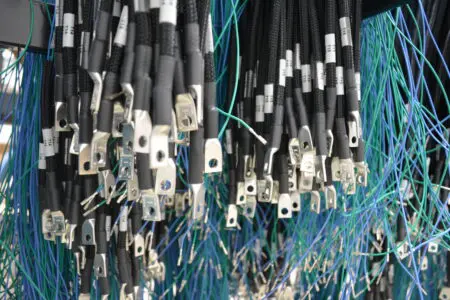
Let’s take a simple cable assembly for example. The Purchasing Manager must handle communication with a separate vendor to provide each component of this assembly (including wires, connectors, shielding, assembly services, and more).
When purchasing teams are forced to work with a multitude of vendors for each individual electronic assembly, it is rare that all vendors can align with the project’s expectations. If one vendor fails to execute properly, then the whole assembly project can be at risk for delays and quality compromises, thus putting your company’s manufacturing at large at risk, as well.
If your PCB assemblies, cable assemblies, wire harness assemblies, and box builds are constantly delayed or are failing prematurely, it may be time to revise your electronic assembly strategy.
A good place to start is to consolidate your vendors. By utilizing one vendor for several types of electronic assemblies, you ensure that each individual assembly is aligned with the larger project, improving on-time delivery rates and quality expectations.
If you’re ready to streamline operations, use this step-by-step checklist to consolidate your electronic manufacturing services providers and streamline your process.
Step 1: Assess your current manufacturing process
The first step to consolidating vendors is to look at your manufacturing process as it is now. What are the areas your team excels in? What areas are often setting your team behind? Properly auditing your manufacturing process will allow you to see where your gaps lie and how your current vendors may be able to fill them. Sub-steps to auditing your current procedures include the following:
☐ List the steps of your manufacturing process.
☐ Identify which steps are outsourced and which are done in-house.
☐ Identify common pain points in the process.
Tip: ensure you are working cross-departmentally at this step to properly understand pain points in each manufacturing area.
Step 2: Assess your current supplier base
Next, you should audit your current supplier base. Pick three-to-five metrics to measure all your suppliers on (i.e. on-time delivery, quality, pricing, engineering support, communication & responsiveness, etc.). Give your suppliers a score out of 10 for each category. Identify the five top performing and five lowest performing suppliers. Follow the sub-steps below for this portion:
☐ List all current electronic manufacturing service providers (i.e. all vendors involved in PCB assemblies, cable assemblies, wire harness assemblies, and box builds).
☐ Pick 3-5 quantifiable metrics to measure suppliers on.
☐ Define each metric (example: if a supplier has 0-2 late deliveries, that is a 10/10).
☐ Score each supplier in each category and average their scores.
☐ Identify the 5 top-performing suppliers.
☐ Identify the 5 lowest-performing suppliers.
Tip: creating these metrics to score your suppliers on will help you consistently assess their performances moving forward. Establish this process now to repeat on an annual, bi-annual, quarterly, or monthly basis.
Step 3: Identify all services of current suppliers
Now that you have identified the top performing and lowest performing suppliers, it is time to assess the services each team offers. What services do your lowest performing suppliers offer that you may need to find elsewhere? What are all the services your top performing suppliers offer? Chances are you may not be utilizing top players to their fullest potential. Follow these sub-steps:
☐ List all services purchased from 5 lowest performing suppliers.
☐ List all services provided by top 5 performing suppliers.
☐ Research additional services offered by top 5 performing suppliers.
Tip: take time on an annual basis to meet with or visit your suppliers. This helps you understand the full scope of their offerings.
Step 4: Identify overlaps in needs & services
Now that you have audited the manufacturing process, supplier base, and additional services that can be provided by the vendors, it is time to match your needs with the vendors’ capabilities. Sub-steps for this portion are:
☐ Compare the lists of your needs and current supplier base offerings.
☐ Identify pain points in the manufacturing process that can be performed by a current supplier.
Tip: this step is often simple if the previous steps have been executed with ample time and care.
Step 5: Research new suppliers to fill in gaps
You will need to find new vendors to match any need that cannot be met by the current supplier base. Take some time to research new suppliers by asking for recommendations from trusted peers in manufacturing and top-performing suppliers, attending trade shows, and researching supplier reviews online. Sub-steps for this portion are as follows:
☐ Identify needs that cannot be met by current suppliers.
☐ Ask trusted peers or supplier teams for recommended vendors.
☐ Attend industry trade shows and events to search for new suppliers.
☐ Find new suppliers and their reviews online.
Tip: identify your needs before attending an industry event or tradeshow to make searching for vendors more targeted.
Step 6: Consolidate production strategically
Now that you have successfully identified areas in which vendor consolidation would make sense for PCB assembly, cable assembly, wire harness assembly, and box builds, it is time to adapt the manufacturing processes. It is important to note that changes in your manufacturing process need to be properly trained and practiced by your team. Therefore, you may not be able to make all changes at once. Below are a few sub-steps to make your transition as seamless as possible:
☐ Transition high-volume or high-complexity assemblies first.
☐ Align production schedules to minimize disruption.
☐ Reduce unnecessary shipping between vendors.
Tip: take the time to properly train your manufacturing team on new processes. Train them in one area at a time to make the transition seamless.
Step 7: Standardize expectations among vendors
After a round of vendor consolidations, it is a great time to reset expectations among your supplier base. Communicate the metrics you assessed your vendors on above to each of the companies you work with. Once they know what metrics are important to you, they will pay more attention to hitting those goals. Sub-steps include the following:

☐ Align quality standards across PCB assembly, cable assembly, wire harness assembly, and box build.
☐ Establish clear documentation and inspection procedures.
☐ Implement consistent reporting and performance metrics.
Tip: establish a process to assess vendors on a consistent basis. Using the process in Step 2 is a great guideline for this.
Step 8: Monitor & track changes in production
Lastly, it is important to track that your vendor consolidation efforts have been successful. Take the metrics used in Steps 2 and 7 to internally track the progress of each vendor. Ask your team: are these metrics improving? Is our manufacturing process running smoother? Are we fighting fires less and instead preventing them? Details on how to track this progress are below:
☐ Track KPIs such as lead time, defect rates, and on-time delivery.
☐ Identify ongoing cost-saving opportunities.
☐ Strengthen the partnership through continuous improvement initiatives.
Tip: make sure to assess your progress after vendor consolidation each quarter using the same KPIs to properly understand if your vendor consolidation efforts were successful.
Consolidating your electronic manufacturing services provider isn’t just about reducing the number of vendors. It’s about creating a more efficient, reliable, and scalable operation.
By following this checklist, manufacturers can simplify processes, improve quality across PCB assembly, wire harness assembly, cable assembly, and box build, and ultimately build a stronger, more resilient supply chain. To download a printable version of this checklist, fill out the form below.