

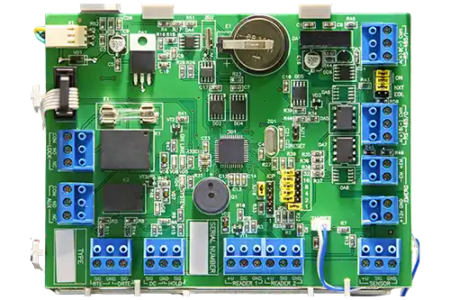
Every search query, streaming session, and cloud backup runs through a data center somewhere. Every one of those facilities depends on printed circuit board assemblies (PCBAs) working exactly as designed to maintain the highest uptime.
As data centers scale to meet the demands of AI workloads, edge computing, and always-on connectivity, the PCBAs inside them are under more pressure than ever to deliver density, speed, and uninterrupted reliability.
At PGF Technology Group, we build electronic assemblies that keep this critical infrastructure running. Here’s a look at where PCBA shows up across the data center, and why the quality of assembly behind these boards matters so much.
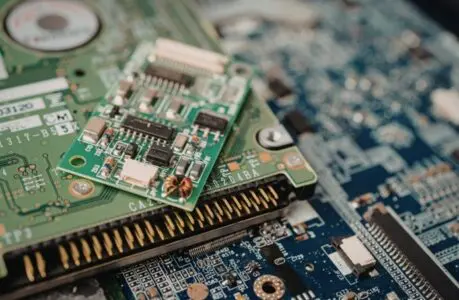
Power Distribution and Management
Data centers live and die by clean, stable power. Power distribution units (PDUs), uninterruptible power supplies (UPS), and rectifier modules all rely on PCBAs to convert, regulate, and route electricity to thousands of racks simultaneously. A single defect in a power-conversion board can cascade into downtime affecting an entire facility, so these assemblies typically go through rigorous testing for thermal cycling, voltage stability, and load handling before they ever reach a rack.
Server and Compute Infrastructure
The motherboards, backplanes, and daughtercards inside servers are some of the most demanding PCBAs to manufacture. High pin-count connectors, tight trace tolerances, and multi-layer designs are needed to support the bandwidth of modern processors and memory. As compute density climbs — especially with the rise of AI training clusters — these boards increasingly call for advanced techniques like HDI (high-density interconnect) layouts and precise impedance control to keep signal integrity intact at high speeds.
Networking and Switching Equipment
Behind every data transfer sits a network of switches, routers, and optical transceivers, each built around PCBAs engineered for high-speed signal transmission. These boards often manage dozens of simultaneous data streams, so manufacturing tolerances are tight and testing standards are strict. Even minor impedance mismatches can degrade signal quality across an entire network segment, making thorough inspection and functional testing a core part of the build process.
Cooling and Thermal Management Systems
As rack densities increase, thermal management has become just as critical as compute power itself. PCBAs control the fans, liquid cooling pumps, and sensor arrays that keep server components within safe operating temperatures. These control boards often integrate directly with facility-wide building management systems (BMS), feeding real-time temperature and airflow data back to operators so cooling can adjust dynamically as workloads shift.

Monitoring, Redundancy, and Fail-Safe Systems
Uptime commitments in the data center world are measured in “nines” — 99.99% availability leaves little room for error. PCBAs embedded in environmental sensors, battery backup controllers, and redundant power monitoring systems give operators the visibility they need to catch issues before they become outages. Redundancy is built into the hardware itself, with backup boards standing ready to take over the moment a primary system shows signs of trouble.
Why Build Quality Matters More in Data Centers
Data center PCBAs face a unique combination of demands: continuous 24/7 operation, high power density, tight signal tolerances, and zero tolerance for unplanned downtime. That combination means a few things have to be true of the assembly process:
- Consistent process control. Automated optical inspection (AOI), X-ray inspection, and in-circuit testing catch defects that could otherwise surface months into deployment.
- Component traceability. Full genealogy tracking on components helps identify and contain issues quickly if a batch problem is ever discovered.
- Design for reliability. Thermal relief, proper via placement, and conformal coating options all extend board life in high-heat, high-density rack environments.
- Scalable capacity. Data center buildouts often require rapid, high-volume production without sacrificing the quality controls that a single prototype run would get.
Built for the Infrastructure That Never Sleeps
Data centers don’t get downtime for a “learning curve.” The PCBAs inside them have to work correctly the first time and keep working for years. That’s the standard PGF Technology Group builds to, bringing the same rigor we apply to medical devices and aerospace and defense programs to the boards that keep the world’s data flowing.
Looking to source PCBAs for your data center infrastructure project? Talk to our team about how our manufacturing capabilities can support your next build: https://www.pgftech.com/contact-us/