
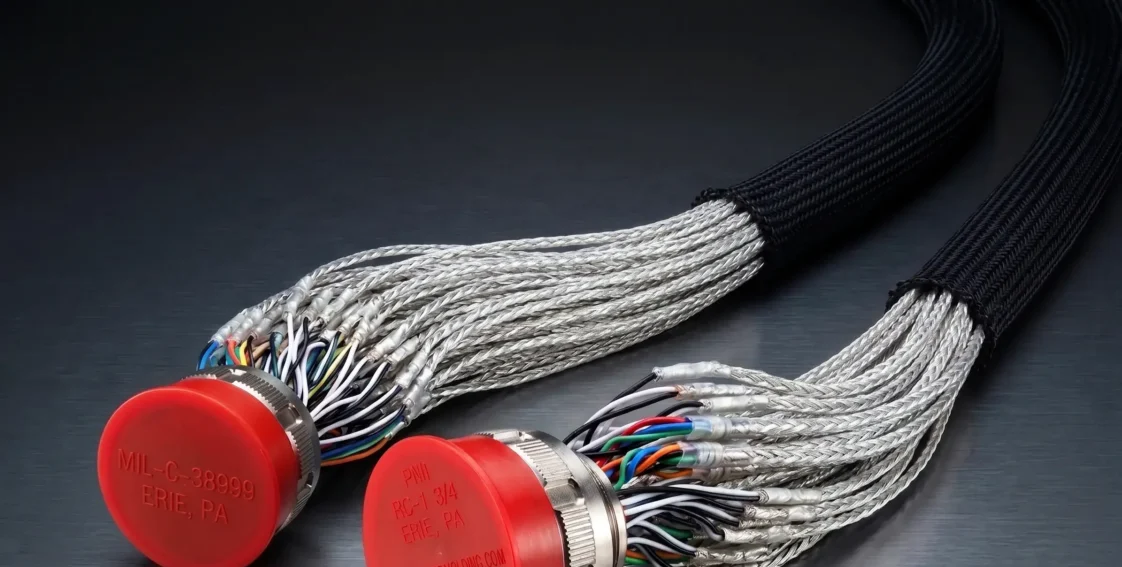
Measurement devices and sensors live and die by signal accuracy. Cable and wire harness assembly for measurement equipment must prioritize quality of electronics while also considering cost and scalability. This ensures the end-product is working to accurately power and carry data for machinery without eating entire budgets.
Choosing a wire harness & cable assembly partner to build for measurement devices and sensors, it is important to consider the balance above. Here is our guide including six tips to choosing the right partner for you.
1- Shielding & EMI Protection
For sensors and measurement devices, signal accuracy is crucial. Electromagnetic interference can interrupt signals, making final scans and measurements inaccurate.
Working with a cable & wire harness assembly partner that has advanced shielding capabilities can help ensure electronics are well-equipped against EMI.
Tip: work with a partner that has experience in highly sensitive environments for the best shielding capabilities. These industries may include medical devices, military, and aerospace.
2- Component Selection
Component selection plays a large role in the cost and manufacturability of cable and wire harness assemblies.
For example, selecting the highest-tech components can be exciting at first, however, they may cause the cost of the assembly to skyrocket.
Similarly, choosing components that have always been sourced in the past without a double-check first can lead to component obsolescence challenges in the future when production needs to be scaled.
Be sure to carefully choose components for your cable & wire harness assembly. The right mix of components will give you a high-quality assembly for a competitive price. Working with an assembly partner can help you select the best components based on your goals.
Tip: choose a cable & wire harness assembly partner that you can lean on for component advice. Often, they may be able to provide alternatives to certain components that cut costs, avoid component obsolescence, and best fit your application.
3- Environmental Durability
Measurement devices are often deployed in tougher conditions than the rest of the equipment they’re monitoring, such as:
- Near heat sources

- In washdown environments
- In areas with vibration and chemical exposure
To ensure your wire harness & cable assemblies are properly protected, review the possible jacketing and shielding options for your environment. Consider the level of protection you need for the environment.
Tip: work with your assembly partner to review jacketing & shielding options that fit your environment without compromising the cable/wire harness’ quality.
4- Documentation & Traceability
Documentation is crucial to the cable & wire harness assembly process for several reasons, including:
- It ensures the assembly partner and customer are on the same page with how a custom cable or wire harness should be built
- It helps train employees on how to assemble a cable or wire harness to exact customer specifications
- It identifies errors quickly if they do occur by tracking each step of the assembly process
For measurement devices and sensors, accuracy is crucial. Working with a partner that documents their assembly process in a proper control plan can help avoid and easily identify errors in assemblies if they do arise, making the time to repair or replace them much shorter.
Tip: review your assembly partner’s control plan after completion of a first article. How well they document their assembly process will give you a good idea on whether this partner will have high-quality assemblies moving forward.
5- Design for Manufacturability
When designing a cable/wire harness, it is important to consider how to scale production. This is where a good cable & wire harness assembly company can help.
Cable & wire harness assembly companies that offer DFM services will help you make informed decisions on how to best design products to scale. They’ll help with:
- Repeatability of assembly processes
- Cost reduction strategies
- Component obsolescence management
- Inventory management
- And more
Tip: work with a cable & wire harness assembly company that offers extensive DFM services rather than simply manufacturing services.
6- Testing & Validation
With cable & wire harness assembly for measurement devices and sensors, validation must be integrated into each step of the manufacturing process.
This means that when your partner goes to test the final assembly for connectivity, it is merely a double-check rather than a first validation of the product.
Look for a partner that integrates quality checks into each portion of the assembly process. This can include:
- Visual inspections
- Pull testing
- Cirris testing
- Hi-pot testing
- And more
If a cable & wire harness assembly includes these practices in their assembly process, then the final quality of the electronics is going to be best-in-class.
Tip: if a wire harness & cable assembly partner has certifications such as ISO 9001, ISO 13485, etc. and has certified IPC trainers on staff, then chances are they will have the highest quality assemblies.
Cable & wire harness assemblies for measurement devices & sensors must prioritize:
- Signal accuracy
- Scalability
- Quality & durability
Choosing a partner that has extensive experience assembling cables & wire harnesses to balance all of the priorities above can be a challenge. If you are looking to understand how PGF Tech may be able to help produce your complex cable & wire harness assemblies at scale, contact us here: https://www.pgftech.com/contact-us/. We’d be happy to discuss if PGF Tech is the right partner for you.