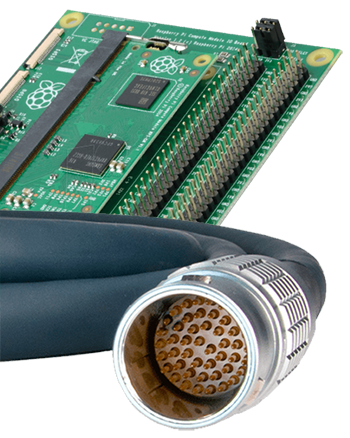

Box Build Assemblies, or System Integrations, include electronic systems within an enclosure. From a single PCBA in a small build to a larger cabinet with a complex electromechanical collection, this assembly houses complicated components for a compact solution.
PGF’s capabilities with PCBA and Cable Assemblies allow us the unique ability to provide a full turnkey result. Our facility’s integration of assembly types gives us the tools to integrate your systems.
These assembly methods collectively ensure the efficient integration of various components, subsystems, and electrical connections within an enclosure, resulting in a fully functional and ready-to-use product or system.
The outer structure or casing that houses the integrated components, providing physical protection, support, and aesthetics to the final product.
Various mechanical elements, such as chassis, brackets, fasteners, and structural supports, ensure stability, structural integrity, and proper mounting of components within the enclosure.
The electrical parts and subsystems that make up the core functionality of the product, including PCBs, connectors, wiring, cables, switches, displays, power supplies, and any other electrical or electronic components required for operation.
Pre-assembled subsystems or modules that are integrated into the box build assembly, such as communication modules, control modules, sensor modules, or any other specialized units that contribute to the overall functionality of the product or system.
Components or interfaces that facilitate user interaction with the product, including buttons, switches, displays, touchscreens, connectors, or ports for connecting peripherals or external devices.
If you’re looking for a larger, more elaborate enclosure assembly, consider our woman-owned manufacturing partner, MIS Controls, Inc. MIS Controls specializes in assembling high-quality Electrical Control Panels, Custom Enclosures, and Industrial Kiosk Control Systems.
Located on the same street as PGF, collaborations between electronic components and the larger electrical cabinet are possible through the WBENC-certified MIS Controls.

Throughout the box build assembly process, quality assurance and documentation play a vital role. Proper record-keeping, including traceability of components, assembly steps, and testing results, is maintained to ensure product quality and facilitate any necessary troubleshooting or future maintenance.
The box build assembly process involves integrating various components, subsystems, and modules into a finished product or system housed within an enclosure. Here are the step-by-step descriptions of the box build assembly process:


The process begins with the preparation of the enclosure or housing. This involves inspecting the enclosure for any defects or damage, cleaning it thoroughly, and ensuring proper alignment of mounting holes and slots.

The next step is integrating the components into the enclosure. This includes mounting and securing the printed circuit boards (PCBs), power supply units (PSUs), connectors, control panels, and any other required components. Proper alignment, fastening, and grounding of the components are crucial in this stage.

The electrical wiring and harnessing process follows component integration. It involves routing and connecting wires, cables, and harnesses to establish electrical connections between the components. Careful attention is given to proper routing, length, insulation, and securing of the wires to ensure reliable and organized connections.

If the box build assembly includes pre-assembled subsystems or modules, this step involves integrating them into the overall assembly. This may include the installation of communication modules, motor control modules, or specialized units designed for specific functionalities.

Once the integration is complete, the assembled product or system undergoes rigorous testing and quality control procedures. Functional, electrical, and performance tests are conducted to ensure proper functionality, adherence to specifications, and compliance with standards. Any issues or defects are addressed and rectified in this stage.

After successful testing, any remaining components, such as cooling fans, heat sinks, or covers, are installed. A final inspection is performed to verify the overall assembly quality, proper connections, alignment, and adherence to design specifications.

The final step involves packaging the fully assembled product or system. This includes applying appropriate packaging materials to protect the assembly during transportation and storage. Product labels, branding, and user instructions are also applied to the exterior of the packaging.
Box build assemblies are extensively used in industries such as industrial automation, medical devices, telecommunications, and aerospace/defense, where they enable the integration of various components into a unified system for applications like process control, healthcare diagnostics, network infrastructure, and mission-critical defense systems. These versatile assemblies ensure efficient functionality, reliability, and compliance with industry standards in diverse sectors.

I would like to thank you and PGF Technology Group, Inc. for your prompt and attentive service regarding our order with you. We are very grateful for PGF’s on-time delivery and quality work.
At PGF Technology, our skilled and knowledgeable team conducts routine inspections and continuity testing to identify the following types of potential defects in manufactured components:
With advanced testing equipment, we can verify the integrity of wire connections in our custom cable assemblies, ensuring optimal performance and reliability.
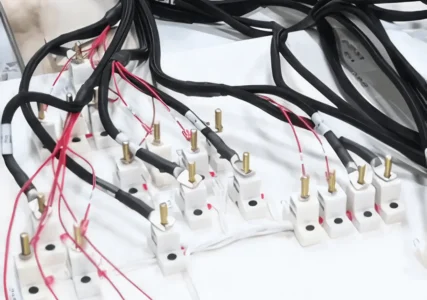
WIRE HARNESS / CABLE PROCESS
Each wire termination is subjected to a calibrated tensile force to verify the mechanical integrity of every crimp joint before the assembly ships.
Using our Cirris tester, every conductor path is electrically verified — ensuring no open circuits, shorts, or miswired connections reach your product.
Inspectors review each completed harness for routing accuracy, connector seating, insulation condition, and proper labeling across the full assembly.
PCBA PROCESS
High-resolution cameras automatically scan every completed board, detecting solder bridges, missing components, and misalignments without manual intervention.
Trained technicians manually review each board for workmanship quality, component orientation, and assembly details that automated systems may not catch.
One transposed connection can make an entire assembly non-functional — or damage downstream equipment. Continuity testing catches miswiring at the source.
Every electrical pathway is verified to confirm complete circuit continuity and proper signal flow across all connections on the finished board.
All of our Made-in-the-USA complex cable assemblies adhere to strict regulatory standards. The following certifications represent our commitment to providing the highest level of safety, quality, and reliability:
After conducting a final functional and visual inspection, we deliver products for seamless installation into the intended devices or systems.




Read our original eBooks about all things contract manufacturing, electronic assemblies, and supplier tips!
Browse our blog posts about the box build assembly process, insider tips, and more!