
As electronics manufacturers respond to regulatory requirements and changing material standards, lead-free manufacturing has become an important part of printed circuit board production. Successful lead-free PCB assembly requires more than replacing traditional tin-lead solder with another material. Components, raw boards, soldering processes, inspection methods, and quality controls must work together throughout production.
PGF Technology Group provides U.S.-based PCB assembly services for customers across medical, aerospace, defense, industrial, and other specialized applications. PGF supports surface-mount technology (SMT), through-hole technology (THT), and mixed-technology assemblies while maintaining quality and environmental compliance requirements for its manufacturing operations.
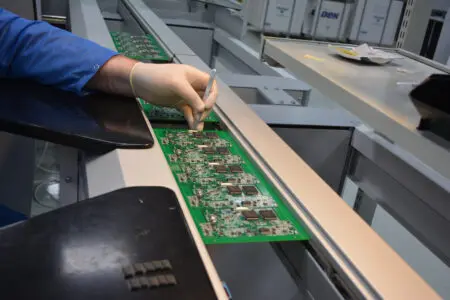
Lead-free PCB assembly is the process of assembling electronic components onto printed circuit boards using solder and materials that meet applicable restrictions on lead content.
Traditional electronics manufacturing commonly relied on tin-lead solder. Lead-free alternatives have become increasingly important as regulations have restricted the use of lead and certain other hazardous substances in electrical and electronic products.
A lead-free manufacturing process affects several stages of PCB production; the PCB finish, components, solder alloy, solder paste, reflow profile, and inspection criteria all need to be considered when developing the manufacturing process.
The specific assembly method also depends on the PCB design. Surface-mount components are mounted directly onto pads on the PCB, typically using solder paste and reflow soldering. Through-hole components are inserted through openings in the PCB and can be soldered using processes such as selective or wave soldering. Some assemblies combine SMT and through-hole components.
PGF has capabilities for SMT, THT, and mixed-technology assembly, along with automated assembly, reflow, selective soldering, wave soldering, and hand insertion and soldering.
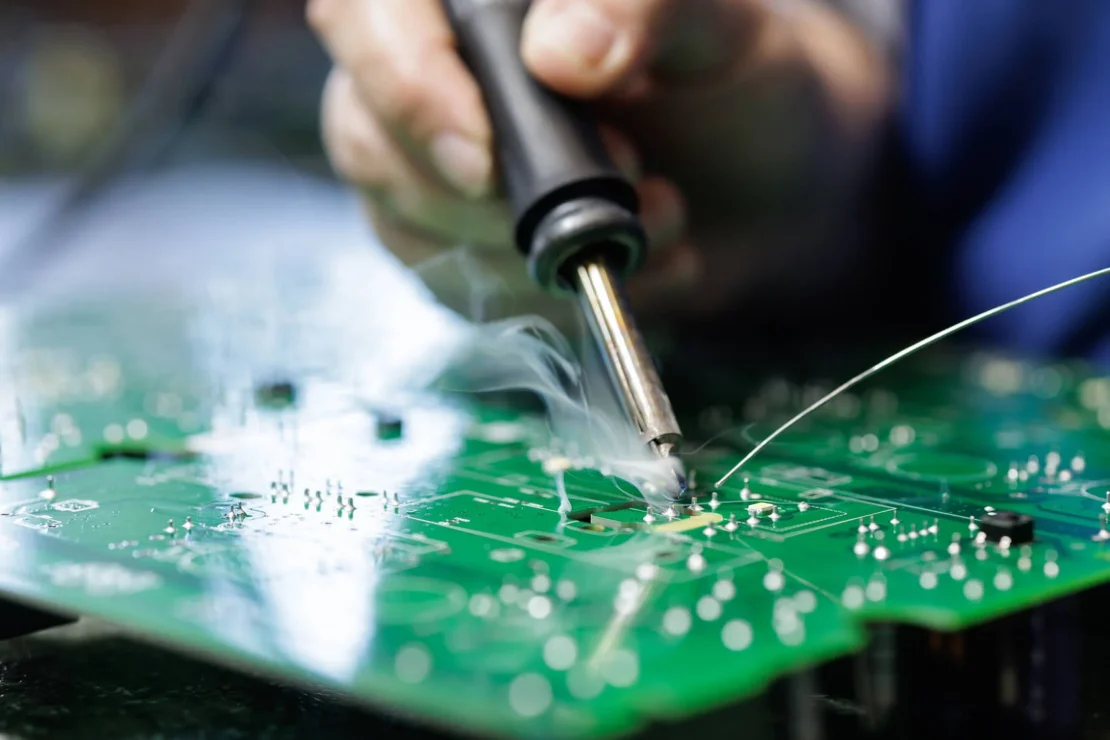
Lead-free solder is a solder alloy formulated without the concentrations of lead associated with traditional tin-lead electronic solder. Several alloy families can be used, depending on the product and manufacturing requirements.
Tin-silver-copper alloys, often referred to as SAC alloys, are commonly associated with lead-free electronics manufacturing. Other formulations may be selected for specific applications based on factors such as processing requirements, operating conditions, component compatibility, and the desired characteristics of the finished solder joints.
Material selection is particularly important because changing the solder alloy can affect the manufacturing process. Many lead-free alloys have different melting and processing characteristics than traditional tin-lead materials. Manufacturers therefore need to consider the thermal requirements of the PCB, components, and solder materials together rather than simply substituting one alloy for another.
The objective is to establish a controlled process that produces consistent electrical and mechanical connections while remaining compatible with the components and PCB materials used in the assembly.
One of the primary reasons for using lead-free materials is compliance with the Restriction of Hazardous Substances (RoHS) requirements. RoHS restricts the concentration of lead and several other substances in covered electrical and electronic products and materials.
RoHS addresses multiple restricted substances and establishes specific requirements for covered materials. A compliant manufacturing program therefore needs to consider more than the solder alloy alone.
Material documentation and traceability can play an important role in this process. Manufacturers may need information about components, PCBs, solder materials, and other items incorporated into the final assembly.
PGF Technology Group maintains ISO 9001:2015 and ISO 13485:2016 certifications and active ITAR registration. The company also works with IPC-A-610 Class 2 and Class 3 inspection requirements.
The exact PCB assembly process varies according to board design, component types, assembly technology, production volume, and customer requirements. However, lead-free SMT production generally involves several coordinated manufacturing stages.
PCB and component preparation comes first. Materials must be handled appropriately before production begins, particularly when components have moisture-sensitivity or other handling requirements.
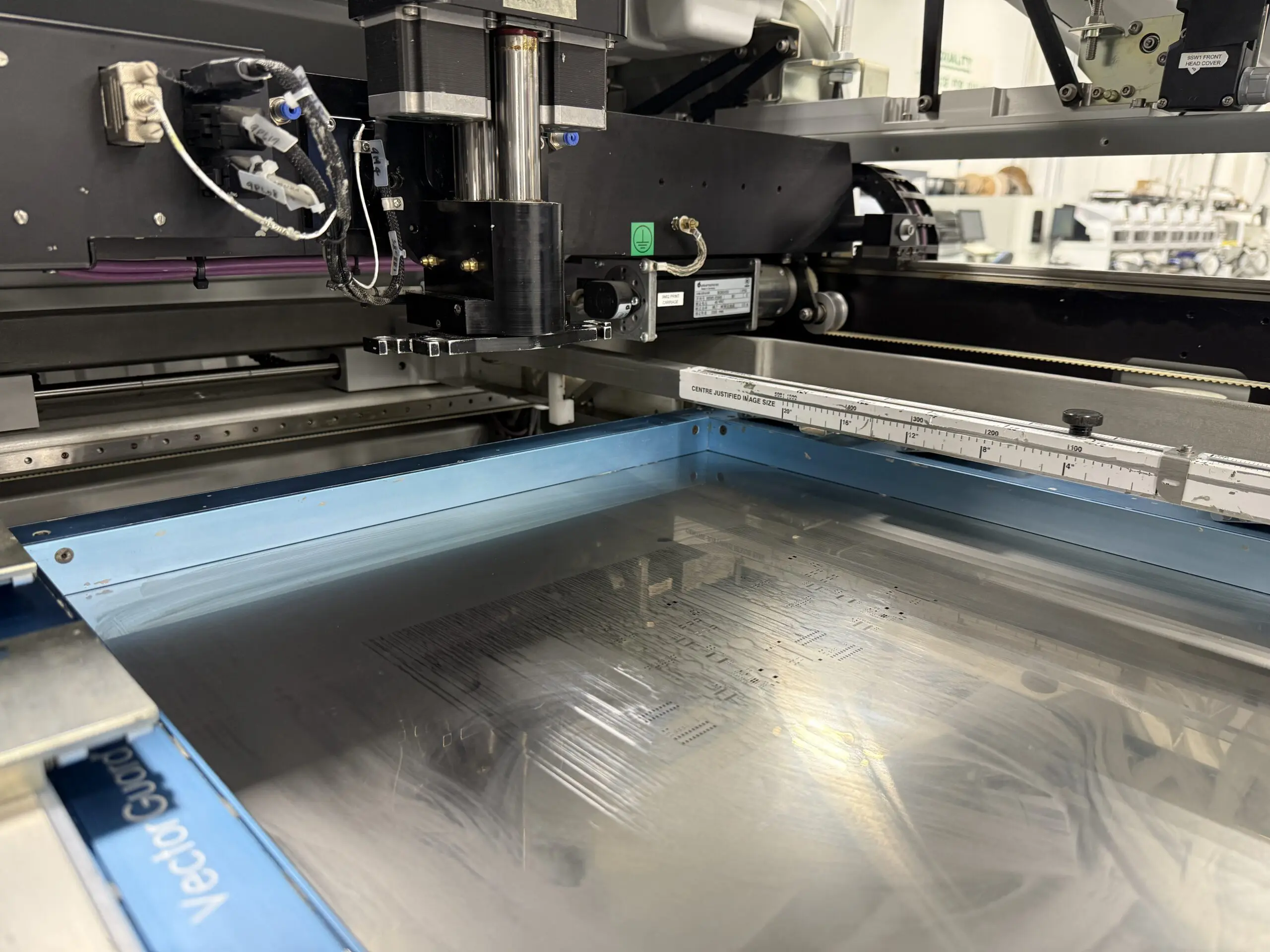
For SMT assembly, solder paste is deposited onto the PCB at designated locations. The quality and consistency of this step are important because the deposited material contributes directly to the formation of solder joints later in production.
Automated equipment then places components onto the PCB. The populated board proceeds through a controlled reflow process that heats the solder paste and forms the required connections.
When a PCB also includes through-hole components, additional assembly steps may be required. PGF supports wave soldering, selective soldering, hand insertion, and hand soldering in addition to automated SMT and reflow processes.
The manufacturing sequence should be developed around the requirements of the specific board rather than applying one universal lead-free process to every assembly.
Design decisions can significantly affect the manufacturability of a lead-free PCBA, starting with component selection. Components and PCB materials need to be compatible with the intended manufacturing process and its thermal conditions. Surface finishes, component placement, board configuration, and solderability can also influence manufacturing results.
Thermal considerations are particularly important because the board and its components experience controlled heating during reflow. Designers need to consider the thermal limitations of the materials and components selected for the assembly.
The design should also provide appropriate opportunities for inspection and testing. Dense layouts, hidden connections, and complex component packages can affect which inspection techniques are practical.
Design for manufacturability (DFM) helps identify these considerations before production begins. PGF provides DFM feedback as part of its rapid prototyping and new product introduction support, helping customers address manufacturing considerations as designs transition toward production.
Inspection should occur throughout the manufacturing process rather than only after the completed PCBA reaches final assembly. Solder paste inspection (SPI) can evaluate paste deposition before components are placed. Detecting inconsistencies at this stage provides an opportunity to address issues before they continue through subsequent manufacturing processes.
Automated optical inspection (AOI) uses high-resolution cameras to inspect completed boards for conditions such as solder bridges, missing components, and component misalignment. PGF uses AOI at defined checkpoints and also employs visual inspection to evaluate workmanship and assembly details.
Electrical testing provides another level of verification. PGF’s capabilities include in-circuit testing to check individual components, circuit connectivity, short circuits, open circuits, and incorrect component values.
Combining appropriate inspection and testing techniques allows manufacturers to evaluate the PCBA at multiple stages instead of depending on a single final quality check.

Quality management and process control become especially important when PCBAs are used in applications with demanding performance or regulatory requirements. Medical devices, for example, can incorporate PCBAs in diagnostic equipment, imaging systems, and advanced surgical tools.
Aerospace and defense applications may require additional controls related to manufacturing quality, documentation, traceability, and technical information. PGF maintains active ITAR registration to support applicable defense and aerospace programs.
Industrial and automotive electronics can present their own operating and manufacturing requirements. In each case, PCB assembly services need to account for the product’s design, operating environment, applicable standards, and customer specifications.
For many OEMs, PCB assembly is only one part of a larger manufacturing program. Components need to be sourced, boards fabricated, assemblies tested, and finished PCBAs may need to be integrated with additional electrical and mechanical components.
PGF offers flexible PCB assembly services to accommodate different manufacturing requirements. Depending on the project, PGF can coordinate component sourcing, PCB fabrication, assembly, and testing.
Customers can also supply their own components and boards while PGF performs the assembly process. These flexible arrangements allow OEMs to maintain control over specific manufacturing activities while leveraging PGF’s technical capabilities and production resources.
PGF also provides cable assembly, wire harness assembly, and box build services. These capabilities allow a completed lead-free PCBA to move into a broader electromechanical assembly when required.
Consolidating these services can give engineering and procurement teams a single manufacturing resource for multiple stages of an electronics project.
PGF Technology Group has manufactured electronic assemblies since 1970 and reports more than 10 million completed assemblies. Our U.S.-based manufacturing capabilities include PCB, cable, wire harness, and box build assembly.
Our PCB assembly services include SMT, THT, and mixed-technology manufacturing as well as automated assembly, reflow, selective soldering, wave soldering, and manual assembly processes. Inspection capabilities include SPI, AOI, visual inspection, electrical testing, and X-ray evaluation.
Together, these capabilities allow PGF to support customers that need controlled lead-free PCB assembly as part of a larger electronics manufacturing program.
A successful lead-free electronics manufacturing project requires coordination between PCB design, materials, components, soldering, inspection, testing, and applicable compliance requirements.
PGF provides U.S.-based PCB assembly along with cable, wire harness, and box build capabilities for customers with a range of electronics manufacturing requirements.
Contact PGF to discuss your lead-free PCB assembly requirements and request a quote for your next PCB or turnkey electronics manufacturing project.